Vite
Add the theme editor to a React app built with Vite.
This page sets up the editor in a React app built with Vite. For Next.js, see Next.js.
Before you start
- Vite 6 or later, React 19 and Node.js 22.12 or later.
- A Vite app. No app yet? See Create a project.
- A project set up with
slabui init. The plugin reads itsslabui.jsonto find your theme.
Install
Install the package
Install it as a regular dependency: your app imports <ThemeEditor />. In the
build, the editor renders nothing.
Add the plugin
import { themes } from "@slabui/theme-react/vite"
import tailwindcss from "@tailwindcss/vite"
import react from "@vitejs/plugin-react"
import { defineConfig } from "vite"
export default defineConfig({
plugins: [react(), tailwindcss(), themes()],
})The editor works only in vite (dev), not in vite build or vite preview.
The plugin also turns on the theme set in SLABUI_THEME, in development and in
the build; see Apply a theme.
Render the editor
import { ThemeEditor } from "@slabui/theme-react"
import { StrictMode } from "react"
import { createRoot } from "react-dom/client"
import { App } from "./app"
import "./index.css"
createRoot(document.getElementById("root") as HTMLElement).render(
<StrictMode>
<App />
<ThemeEditor />
</StrictMode>,
)Render it once, next to your app, so it stays mounted when your routes change.
Open the editor
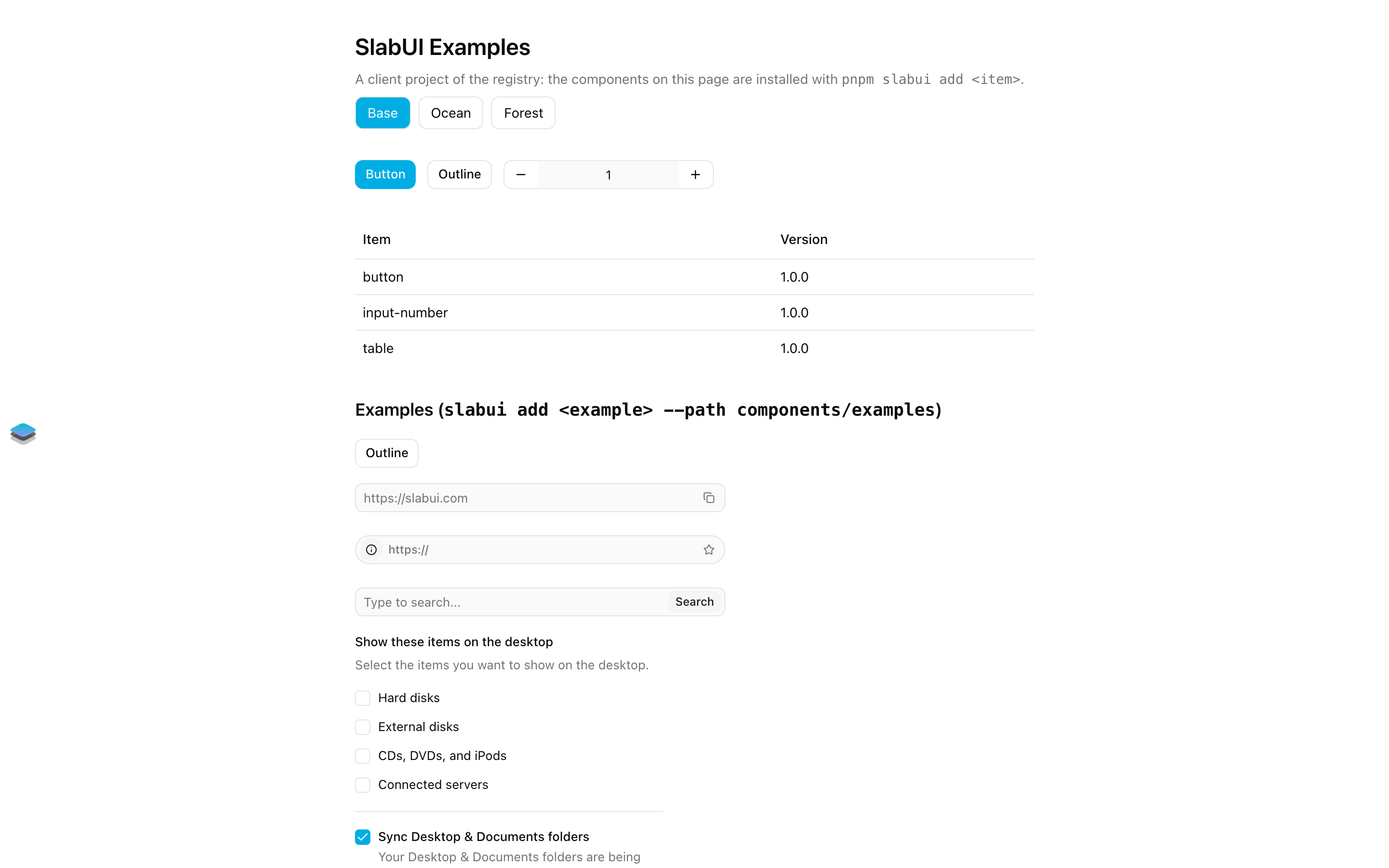
Open your app and click the button on the left edge of the page. The first time,
sign in to your SlabUI account (the same login as npx slabui login).
Apply a theme
Themes created in the Themes section of the
editor are turned on with SLABUI_THEME, one per deploy. The plugin reads it
from the environment and from your .env files (.env, .env.production…),
like Vite's own variables:
SLABUI_THEME=oceanThe plugin also reads VITE_SLABUI_THEME, which Vite exposes to your app as
import.meta.env.VITE_SLABUI_THEME. When both are set, SLABUI_THEME wins.
You can also set the theme in the theme option. An attribute already written
in index.html wins over both:
themes({ theme: process.env.BRAND ?? "ocean" })Options
The plugin works without options in a project set up with slabui init: it
reads your slabui.json and knows where your theme is. To keep your theme
somewhere else, pass the options to themes():
export default defineConfig({
plugins: [
react(),
tailwindcss(),
themes({
css: "src/styles/globals.css",
dir: "src/styles/themes",
}),
],
})css: the file where your theme is saved. Defaults to thecssfield ofslabui.json.dir: the folder where extra themes are saved. Defaults tothemes/in yourstylesalias.reference: the theme that Restore defaults brings back. Defaults to the SlabUI default theme.theme: the theme applied to your app. Defaults toSLABUI_THEMEorVITE_SLABUI_THEME, from the environment or the.envfiles.
Paths are relative to Vite's root and may use the aliases of your
tsconfig.json.
Themes folder
Themes created in the Themes section of the
editor are saved in the dir option or, without it, in themes/ inside the
styles alias of slabui.json. With "styles": "@/styles" and
"@/*": ["./src/*"] in tsconfig.json, that is src/styles/themes. The folder
is created with the first theme.
Monorepos
The plugin reads slabui.json and tsconfig.json from Vite's root: the app's
folder when you run vite from there or with pnpm --filter <app> dev.